Welcome to the middle path

My photo
Sporadic photos and notes from a Psyche-midwife, cheerleader, anthropologist--aka clinical social worker in therapy practice. Photos are usually mine except for those of historical events/famous people. Music relevant to the daily topic is often included in a web video embedded below the blog. Click on highlighted links in the copy to get to source or supplemental material. For contact information, see my website @ janasvoboda.com or click on the button to the right below. Join in the conversation.

Saturday, August 24, 2013

Moving Through Shadowlands, Take One


It's been four months since I last wrote here, leading Door Number Two to feel like an overdue library book I'm too embarrassed to return.  But there's been a number of topics brewing, and a few dozen blogs written in my head, so let's dip in again and see how the water feels.

Sunday, if you're in the valley, I'm doing my annual sermon at the Unitarian.  This summer's theme is transition, as the congregation prepares to (quite happily) welcome a new/old minister. Jill McAllister cut her teeth preaching here way back in the early 90's and is coming home after years in Kalamazoo.  She's a yogi, runner, new cello player, great storyteller and harbinger of love.  But change, even good and welcome change, can be scary.  Some wise committee thought to prep the Corvallis UUs by asking all the summer sermonizers to talk about transition.

When I was given the topic, I thought I'd use the birth metaphor as the frame for my talk.  I use it a lot with clients going through big changes.  If you've had a baby you know what transition means.  It's the point in labor that is often referred to as "intense", a mild way of saying it would not be surprising if during it one's head turned completely around ala "The Exorcist".  It's bloody hard.  And part of what's hard about it is that things are neither here nor there, especially for the baby, which is at that point slamming against the cervix.  Baby is not in the comfort of the womb, or in the comfort of the mama's arms.  Baby is in a tight, dark space that is really, really uncomfortable.  And Baby (I'm guessing here) doesn't have a clue of the goodness awaiting. Or the new unknown discomforts.

We've all been in that place of discomfort.  Neither here nor there, like before a wedding, a move, a new job.   We've left the familiar behind, or want to.  And even if the familiar is, pardon the vernacular, shit-- well, it's known, predictable shit.  Sometimes we stay in the before place for that very reason, way too long.  But even when we ready ourselves to make the Big Move to what we hope we want, we get scared.  And sometimes paralyzed.

My good friend Lisa is a very wise and experienced midwife.  We've talked (non-specifically, of course) about clients both of us have had who get stuck at that point of transition.  Clinging to what's known and afraid of what's to come, they just--- stop.  I've seen kids in my practice do it at cusps of big developmental changes.  If they are late teens or young adults, we have a term for it:  failure to launch.  The visual I get when I hear that is of a rocket with flames and force beneath but just not quite enough to get going.  I think that term applies across the life span. We get a fire in us, an uncomfortable pressure for change.   It freaks us out.  And we cling to what is known even harder.  But the discomfort builds and builds.

Then we have a choice.  We can numb the discomfort when it gets to an intolerable level.  We go unconscious in some way so we don't feel the burn anymore.  It's there, but it's like a spinal block in a labor.  With no discomfort, many women lose the urge to push.  The birthing process can come to a standstill.  Often, outside intervention (say, pitocin-- a contraction stimulant) is needed to get things moving along.

If the paralysis is more self-directed, that outside intervention can be a long time coming.  If we do a good enough job of numbing, we don't feel our pain directly, so we are slow to respond to the need for something new to emerge.  We get stuck.  And then we get new sorts of pain, some of which seem more manageable or direct-able or at least more predictable than the uncertainty and discomfort that was leading us to change.

The other choice is to give birth.  Give birth to a new way of being in the world, of seeing ourselves, of being in relationship or in some instances being alone.  We don't yet know how this new way will be, and that's frightening.  We are good at telling ourselves scary stories about how things will turn out, and about our lack of ability to cope.

Robert Frost said, "The best way out is always through".  He's right; it's the ONLY way out.  I think I have told this story here before, but it's worth repeating.  Many years ago a quite Christian co-worker was facing enormous personal suffering in her life.  I wanted to comfort her and was stymied by the immenseness of the situation, and awkwardly said some Hallmark card cliche' about God giving opening a new door when an old door closes.  She sighed, and said, "Sure.  But it's hell in the hallways."

Yes, it's hell in the hallways.  So we keep going.  To do that effectively, we don't deny our fear, and we don't cling to it. We ask for support when needed and we are gracious in accepting it.And especially, we need to find compassion for ourselves in the journey.  We need to support ourselves like we would a child or an animal in suffering-- giving comfort, and acknowledging that we cannot fully explain or even expect that everything will turn out in a certain way, but knowing that transition doesn't last forever.  

Louis Adamic wrote: "My grandfather always said living is like licking honey from a thorn".
Reminds me of an old TV show I liked, Hill Street Blues.  After briefing the cops on the day's horrorshow, the police sergeant would say, "Let's be careful out there".  And it was clear what he meant was "I love you people.  Life's hard.  You have good work to do. Watch out for each other.  Be safe on the way."

You, too, have good work to do.  And there are people who will help you through the scary parts if you need it, midwives if you will.  But even if you don't have them, or don't access them, there's more than a good chance you're going to do fine once you stop resisting and let the process move in the way nature and psyche intends.  You have thousands of years of wisdom deep in your DNA that knows exactly what to do.  Your job is to open up to the change.

Jana
P.S.  This may or may not be the sermon Sunday.  Things change.

Saturday, April 20, 2013

this life of mud and miracles

It's been a horrific week on the planet, hasn't it?
A woman asked me tonight how I was "processing the events in Boston."  An honest question-- the quotes aren't meant to imply less.  And my answer, like my process, was not very articulate.  I was in horror that day.  I had been sucked for a time into a familiar narrative about inhumanity.  And later in the day, I felt collapsed to read about the dozens killed in bombings in Iraq, and then worried about friends on the Iran/Pakistan border who'd suffered through a major earthquake, and the dozen or more my own government had killed via video-game-like drone strikes.  Such suffering exists!  And ours no less real than those of our brethren in a dozen other countries.

I look at the faces of the young men, one younger than my own son, who apparently caused this great suffering.  I feel such sorrow, and yes, compassion.  What could drive someone to see life as so meaningless, to be able to make another human-- someone's sister, daughter, father, son?-- so anonymous?

 It's easy to hate.  And lazy.  We want to see ourselves as different, above-- and this arrogance leads us to cheapen the lives of others.

A long story led me to a more worldly understanding.  After losing one of my senses, I worked hard to develop another that was lagging.  I joined a world photo diary coordinated by artist Wolf Nkolze Helzle of Germany.  Through it, I "met" friends from far away-- from Pakistan, Finland, Iraq, Indonesia.  The world became smaller, and foreigners-- less foreign.   An earthquake in Karachi, terrorism in Iraq, relentless winter in Germany became as unsettling as random violence in the US.  Good, or bad, this extra kinship?  Well, both, of course.  More love equals more responsibility.  We all are in this (little planet) together.  And through these friendships it's even clearer that we are all so much more alike than different.  We love, we suffer, we get defended and weary.  We try to simplify the complications that mark each human journey by applying false formulas of "us" and "them", and then, if we can bear being open and suffering with (com-passion),  we see that we are just-- we. 

It's easier to shut down.  To not care, to not look or see, to pretend that somehow our pain or longings or love is more real than someone who lives far away, and thanks a different or no God.  Can we sit with that desire without succumbing to it?  Forgive ourselves for our smallness and still find the energy to enlarge? 

Chekhov said " Happy families are all alike; every unhappy family is unhappy in its own way." I don't buy it.  If we feel, we feel it all, suffering and happiness.  Pretending a divide lessens us all.

As a closing note:  I am thinking so much about the terrible losses and deaths in West, TX this week, many of whom were first responders to an industrial fire that became an explosion.  Their story was lost in the wake of the Boston bombings and aftermath.  If you know a first responder-- a firefighter, EMT, police officer etc--  let them know you appreciate their service.

Now go out there and drown hate with your love.
Jana

PS:  The title is taken from a beautiful song by Richard Buckner.  "How this life from mud to miracles/It's the prettiest little burden isn't it?"

Tuesday, April 2, 2013

Your Brain on Grins


Went to the library for the first time in a while, and binged at the new release section.  It's fun to judge a book by its cover and its first few paragraphs, and I pick up things I'd never hear of, let alone consider, otherwise.

Take this one:  The Face of Emotion:  How Botox Affects Our Moods and Relationships, by Eric Finzi, MD.  I thought it might be a condemnation on the use of botulism toxins to freeze our faces into wrinkle-less masks.  But nope, that's what this guy does for a living-- or rather, he's a dermatological surgeon, and Botox is a big chunk of his practice.  Now I'm judgy as can be, but I read the back cover, and a couple authors I like neuroscientist, an evolutionary biologist) like it, and their comments are focusing on the face and emotion part, not the botox.

Home, an hour later, I've read the first 150 pages, and put in 20 or so paper scraps to mark passages and studies.   His premise is not ridiculous:  facial expressions form a strong feedback loop to the brain.  Maybe you've heard of the pencil study.  He gets to that around page 105.  Experimenters in the early 70s found that when subjects clutched a pen between their lips, effectively forcing the same muscles used in a smile, they rated cartoons as funnier than if they held same pen with lips.  To remove bias, the subjects were doing various tasks while mouthing their pens, under the guise that the study was actually looking at how persons with limited use of limbs could adaptively use mouths to control tools or complete tasks.  Holding the pen in the lips inhibits the muscle used primarily for smiling, and it "sort of bummed them out".  No, not quite their language-- it "inhibited the experience of positive emotion" or something.  At best, it seems our thinking about why we are making the face ("I'm happy" vs "this pen shoves my mouth up") doesn't change how our brain interprets the muscle motion-- Brain is heartened to see us smile.

The book is chock full of interesting anecdotes, most of which you probably have heard elsewhere.  Dr. Finzi touches on the universality of facial expressions over cultures.  A a true smile is a smile wherever you are. and disgust looks the same in remote villages in Ecuador as in Brooklyn. He talks about micro-expressions, those very fleeting millisecond facial changes that modify or discount conscious facial changes.  You know that fake smile people give?  It's in the eyes.  It's hard to fake an eye smile.  They are using their zygomaticus muscle but inhibiting their eyes, a big give away.  (Caution:  sociopaths can fake it pretty good, and that's because they aren't fakiong it-- they are delighted with glee they are getting ready to eff you up.)

You can elicit that same true smile in some weird ways with the same sunny-after-glow.  Scientist Duchenne did it with electrodes, and his subjects full on grinned peepers to teeth  (see pic on page 64). Where there are cultural differences, it is more about circumstances in which one might be allowed to display these expression, but not their existence or meaning.  For example, Japanese youth often hide smiles behind hands and engage in more social (not Duchenne full-on) smiles.

The read is full of interesting nuggets to illustrate that much of what think is conscious about expression is not, and either way, it changes or brain, and then often or perceptions/moods and way of thinking of the situation;.  Case study of one:  I consciously practiced the Mona Lisa Half Smile (eyes slightly lifted, forehead smooth, peaceful secretive smile) through Chapter 1-5.  I feel calm and good and benevolent.  I revved up to the open mouth crinkly-eyed Duchenne smile for the next half hour and was energized-- it was cold bacon hitting a hot griddle. 

The point-- there is a point here-- is the expression makes the face, and the face makes the wo/man. and the wo/man makes a life out of that face.

We smile all alone, so it's not just a social reaction.  But we smile 6 times more in social settings.  Blind people too, so it's not just a social feedback loop.  The more we smile, the happier we'll be.  We are throwing little dopamine biscuits into our reward center, which is wired by time and experience to know a good smile at you usually benefits you at least indirectly, and a spontaneous smile is proof of happiness.  And at this point Le Sophisticate Brain gets a little mushy, because hey, why you so happy holding that pen with your teeth?  But look, you are.  OK, let's reinforce it with a speck of dopamine.  REWARD!Brain correlates both the events that bring smiles and the smiles that bring rewards as desireable; it's not so picky.  And the person, they get happier.

 In my single case study I improved my scattered anxious monkey mind's mantra (too much to do too much to do /repeat) into a state of darn nice happy contentment.  and a little giddy  excitement.  just by consciously relaxing the part of my forehead associated with distress (read: worry, sadness, frustration etc) into a friendly open field.  And I found my lips twinkly upward, and then my eyes, and they by golly I was reading and grinning like a goof and happy.

I have to say this works better for me than a meditation sit, where i endure for 20-30 minutes and come out either slightly comatose, or full of self-criticism for getting bored, chasing my thoughts, and not Getting There.  Laughing yoga and smile practices seem to achieve very good results without all the painful positions for those of us who can't sit still for more than fifteen seconds.  It's not the same as all of the benefits you'd get from years of meditation practice, but I'm sold on incorporating MORE JOY, or at least practicing its expression.  Monks and laughers are both activating similar parts of the brain.  There's many ways to skin a cat.

The Big Kabowski of the article is his noticing that as he botoxed away those worry creases from his lady patients, they reported feelings happier, for the 1-3 months after the shots wore off.  Here things get a little mushy.  The effects held true whether they were receiving botox for migraines (another indication), bell's palsy, whatever.  "When three is not tension in the frown muscles, when those muscles have been temporarily frozen with Botax, there is no negative feedback to report to the brain."  In other words, his inelegant hypothesis is that when we smile, brain says "I'm happy, things are good"  We are changing our thinking and emotions without real consciousness,  But effectively.  When we frown, same thing happens.  When we can't frown, we feel as if we aer in less distress.  To simplify it even more, Finzi believes this feedback loop is being calculated all day long on a brain score sheet.  "I'm frowning this much, fear this much, worried this much, happy this much:  total:  PA'NIC with occasional sun bursts."And we can choose to consciously manipulate that.  If we literally cannot frown, the thoughts and feelings triggered by this facial reaction aren't formed..  Studies on persons with facial paralysis echo this finding:  the sufferers say they can articulate the emotion but can't really inhabit it. 

Finzi did an interesting study.  He took people with depression and migraine and treated their migraines.  They were less depressed.  Who wouldn't be?  They had migraines before.  So he narrowed the field.  He treated people with depression.  If you know what someone looks like with true depression, you know what I mean.  Crumpled faces, worry crease, downward jowls.  Behold, they improved-- til the shot wore off 1-3 months later.

A couple of things might be happening with our subjects.  They look less depressed, so people are complimenting them, interacting with them, smiling at them more.  They are smiling back, more effectively because they can't pull that ha;f-assed smile with wrinkled forehead off anymore.  We're social smilers-- you give more, you get more.  Now they smiles look less pained, ore genuine.  It's reinforced by other's reactions, by what they see in the mirror.  Hey, maybe this botox isn't so evil after all.  It's so local, so specific-- probably less risky that a lifetime of pills that have to metabolized through your liver.  I'll be going back to the stacks to see what hard science has been publisher about this theory.

In the interim, I'm just going to do my own experiment: 20 minutes conscious smiling every day.  Maybe broken up into 5 minutes an hour.  See what happens.  Can't hurt, unless I swallow the pen :)

This practice is especially useful for those of us with TOO DARN MANY MIRROR neurons.  How do you guess we show empathy for all those stories we hear?  We lean in, get the dog eyes, wrinkle our foreheads in concern.  We are deeply intereswted in analyzing all those microexpressions and we form little movies of them on our face and brain.  And then, like actors repeating a highly emotional and dramatic role, that faucet don't turn off when the show is over.  Our brain score card has registered that we wore the unhappy/anxious/sad  face much of the day. Guess how we may feel?   For therapist, this is a real challenge.  It's also way I like to PLAY SO HARD when I am not being a therapist,, which you may have noticed if you follow this blog.  Antitoxin!  Because when I am wearing the expression of deep concern, my brain is on alert that life is difficult, sad, nasty, brutish and short.  I throw in as much lighthearted humor as is appropriate to my client's situation, for balance, but it takes a toll.  As a result, don't ask me to join you see the latest expose on Something Horrible That is Happening Right Now.  I just don't want to work after work.  But if you want to take the dress-up box to Browsville for a photoshoot  and picnic in the park, I'm in.
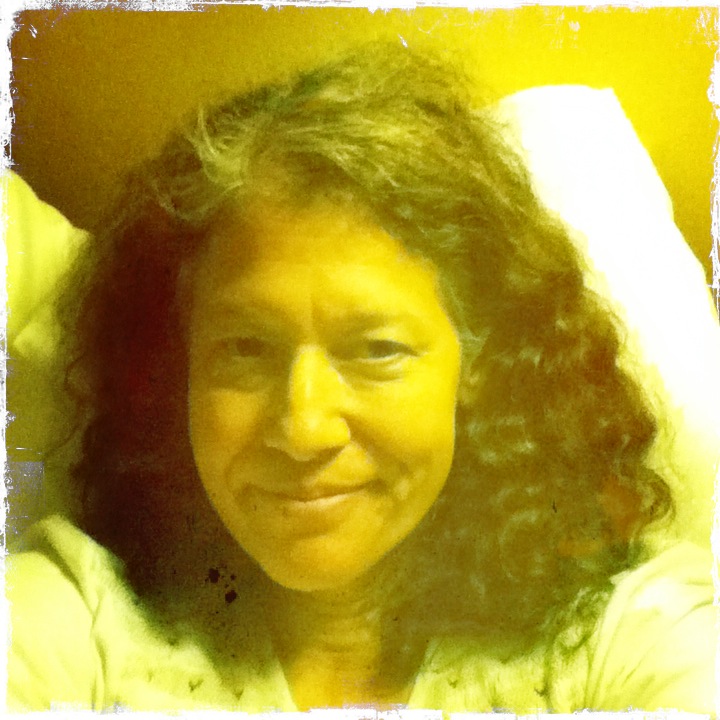
Homework:  try it!  Do a quick facial scan.  Check for the usual suspects:  tight jaw, set mouth, wrinkled forehead.  Imagine Mon Lisa's forehead, a vast plain of relaxed skin.  Life the corners of your mouth and eyes.  Use props if you like, but you don't need to for effects.  Hold that expression best you can for you next 5-15 of whatever you are doing--dishes, talking to a friend, shopping at the store, weeding in your garden.  What do you notice?  Let me know. 


Read this book, or hear Finzi's interview on NPR.  Witching hour has struck and I must shut up now so you are left to your own devices on that one.  And make sure to practice the eye/mouth smile at least 5 minutes a few times a day and report out here.

Feelin' Breezy--
Jana


Thursday, March 21, 2013

Wherever you go, there you are

No matter where you go, there you are, said Confucius. 
happy in the garden

Just finished a poignant article about a woman who lost nearly half her body weight but not all her troubles.  She had bariatric surgery, and believed, as her surgeon insisted, that life would be so much easier after she got want she thought she really wanted-- a skinny body.  But she found that the insecurities did not fall off with the weight.

A lot of us are like this.  We think when we get that one problem dealt with, we will finally be happy. 
Once we have finally attain the right "X".  Substitute for X:  partner, job, weight, place to live.

Wherever you go, there you are.  You, with the same imperfections, strengths, and history you had before.  You can run, and you can't hide, and when you get "there", the common denominator between you and comfort arrives with you. 

Last week, author and Harvard professor Dan Gilbert lectured at Oregon State University about his research on happiness.  You can hear some of his tenets at his Ted talk.  Think you know what will make you happy?  Dr. Gilbert's findings suggest you are wrong.  He found that many people overestimate what circumstances will lead them to golden joy-- and what will make them miserable.  The good news:  Most of us are far more resilient than we believe.  75% of us will recover, or at least be OK, two years after something we assume will ruin us.  "We are not the fragile field of flowers we believe ourselves to be,"  Gilbert says.  And conversely, we are also not going to be saved by that X factor we think is between us and our ultimate happiness.  People routinely overpredict what will make them happy in the future.  Whether it is that new car, tenure, new job or new lover, we predictably end up not a whole lot happier after the initial high of achievement than we were to begin with.
the constant, changing moon brings me ridiculous joy

So what does make us happy?
Gilbert noted a few things.  Experiences, not stuff bring more lasting pleasure.  We will remember and cherish that trip overseas more often than that new piece of bling.  And bling connected to relationship will always be more meaningful than just bling bought, because of the memories brought with it.  People are happiest when they are engaged, not passive recipients of objects or experiences.  In one replicated study, people given $20 were divided into two groups.  One was told to spend it on something enjoyable for themselves, and one told to spend it making someone else happy.  Guess which one reported more and longer lasting satisfaction with the experience?
seeing old friends and hearing good music=happy
And it's frequency, not intensity, that's the best predictor of overall life satisfaction.  Small and common joys trump far-apart epiphanies.    A sense of meaning and community also make a huge difference.  For a great overview of happiness research presented in an intriguing and digestible format, watch the wonderful documentary "Happy".   

I'm 24 hours late in marking International Happiness Day.   But it's never too late to figure out how to bring more satisfaction to those hours you have left on Earth.  Don't put it off.

Related blogs:
http://www.janasvoboda.org/2011/05/troubles-and-happiness.htm
http://www.janasvoboda.org/2011/01/resolution-20-more-experiences-less.html
http://www.janasvoboda.org/2011/01/resolution-18-notice-whats-going-well.html

Quote of the day:  "It's never too late to have a happy childhood."  Tom Robbins, American author
Song of the day:

Monday, March 11, 2013

Persistant Popsongs of Perverse Imps: EARWORM ALERT

Earlier tonight, I looked at the Facebook page of a woman who recently changed coasts.  She added a video she said she used to explain to Easterners how life was here in the West.  I made the mistake of clicking on it, and now for the last hour or so the oddly hooky "Man on a Buffalo" refrain has been sawing away on my frontal lobe. Soon I'll resort to the handful of anti-helmintic (that's fancy-ass for worm) home cures, but in the meantime let's look at the malady more closely.

annoyed by ancient Britney Spears tune
Earworms are common-- nearly everybody gets them.  Studies put the range of reporters in the high ninety percentile.   Women tend to have them longer, and find them more annoying, but both genders suffer as frequently.  They're those little short snippets of songs that loop endlessly in your head for up to hours at a time.  Lyrics are three or four times more common than just melodies.  We don't usually hear the entire song, just 15-30 seconds of a catchy phrase.  Commercials know our auditory memory capacity and play to that, with short, snappy jingles the advertisers hope will take resident in our brain and preferably in communication with our wallet. 

The phrase in the header, "Imp of the Perverse", is the title of an Edgar Allen Poe short story about a man driven mad (hey, it's Poe) by torturous "ringing...in the memory" of "an ordinary song, or unimpressive snatches from an opera".  He rightfully notes it's not much better if it's a good high-brow song-- but let's face it, it rarely is.  My last two earworms were bad hits of Helen Reddy and Olivia Newton John. Hated them then, hate them still.  But it's not much better when it's Jimmy Cliff or Madame Butterfly.

ready to dive in with some old janet jackson
Our brains love music.  We can more easily remember sequences of numbers or words when we add a melody to help attach them.  People with naturally more sticky brains (think OCD) are going to be predisposed to earworms, but average Joes also go there when there is too much competing information and the mind wanders to find a predictable path to pace.  Music IS predictable, and that's the problem. Visuals change according to angle and light, smells and tastes according to proximity and competition (think the taste of a particular wine with chocolate compared to same wine with shrimp).  But Baby Baby Don't Get Hooked on Me is recognizable soft or loud from the first couple of notes, and the brain grabs it like a falling man might grapple for a ledge, then hangs on for dear life.  On the other hand, Brit researchers found earworms are more likely to crawl into a bored, distracted mind.  Yet another reason to follow paths of moderation in thinking.

Stressful as the worms are, their role isn't completely parasitic.  They are giving the auditory cortex the equivalent of hand-wringing or pacing when the rest of the brain is overloaded.

 They're benign in their usual short-lived state, although clinical anecdotes present cases where sufferers had the same tune for years at a time.  For most of us, it's a few minutes, maybe off and on over a few hours.  It rarely lasts past the natural break of sleep.

Remedies abound, but no sure cures.  Here's some to try from the HowStuffWorks site:
1)  Sing a different song (Girl From Impawhatever is famous for this) or play a tune on an instrument.
2)  Do something entirely different and physical-- work out.
3) Sing the earworm song ALL THE WAY through (past the snippet that's looping).
4) Visualize the earworm, embodying the song, crawling out of your ear. Then visualize going all Darth Vadar on it. 
5) Insert it in another ear.  Do not expect them to love you for it.  This trope appears in several science fiction stories as a gift that keeps on giving.

For more on this little life annoyance, read this article by Bill White or listen to this episode of the always fascinating Radio Lab podcast: http://www.radiolab.org/blogs/radiolab-blog/2008/jun/17/earworms/

I'm off to de-friend Leigh from my Facebook page (just teasing, you vixen)  and then maybe hum a little Johnny Cash--

Jana  

What ever you do, don't click here.  It's only half as potent as "Man on a Buffalo" but you still may beg for mercy.  You were warned.

Saturday, March 2, 2013

Strangers in Strange Lands

natural variation = added benefit, even if uncomfortable
Tonight I have been thinking about mental illness and diagnosis, and the benefits and problems of trying to sort people into boxes.
I'm blessed or cursed with not being a black and white thinker.  When a friend forwarded me this article that showed many diagnostic labels of mental illness share common genetic links, I had a strong internal reaction.  The article said that related people sharing "genetic aberrations" had risks for several mental illnesses.  What they found most interesting is that the effects of the same gene change could be expressed in different illnesses, for example with one twin showing schizophrenia and another bipolar disorder.

I have seen the devastating effects of mental illness in this and previous generations.  I don't doubt that our endocrine system, not to mention our brain, is no less immune to the insults of living, environment, random gene accident that our other organs.  As such I think it deserves absolutely no additional moral interpretation-- it's an organ not functioning as we expect it, or an organ that is ill.  I don't see true mental dis-ease as any more morally damning than a kidney problem or a under/over active pancreas. It's not a matter of poor willpower or moral turpitude when it fails to work properly all the time.  The stigma we hold to mental illness is fear based on an ego level:  "there but for the grace of God/my will/clean living/etc" go I, and let's just blame the victim.  It's our defense mechanisms acting out and claming control over one particular, very complicated organ-- the brain.  I don't blame anyone for feeling that.  We manage anxiety by figuring out all the ways this scary outcome cannot, will not apply to us.

 grateful for artists to reinterpret the world
But what it you are indeed well-represented in the genetic dice roll as an outlier?  What if you are one of those kernels that does well in dry seasons and all it does is rain?  You are incredibly logical, efficient and detail oriented in group that values people-reading and glad-handing and seeing all forests, all trees?  Or exceptionally sensitive, just dripping with mirror neurons such that you can barely hear what people are saying because their pain or agitation or anger is sharply evident to you in your interactions? 

When as a nation or a world we start to judge, to evaluate and grade and degrade varations as being good or bad, it's important to step back and see the forests in all those funny looking trees.  We need most everybody, even those on the edges of the bell curve.  We need engineers that can ignore well-meaning but emotional calls for esthetics that detract dangerously from functionality.  We need artists who can articulate the depths of joy and suffering that are rellly, truly there in most of us even if we don't have the language to express them.  We need the people who are moved to tears by the unspoiled natural environment to save it from slaughter for those of us who may not see its utility and healing potential.  We need the number crunchers and the emoting advocates to create a world that works not just logically, but on a heart level.
We need the schizophrenics who can call out bullshit and make us uncomfortable, and the persons with Autism who can do the same and remind us to question our habits of not saying what we really mean.  We need the melancholic poet and artist  who pull us pearls out of their pain, and the hypmanic who creates entire symphonies in six day no-sleep spurts.

We also need to be safe, and most of us need to be in relationship, to have meaning and purpose, to serve.  On the edges of those bell curves, that doesn't happen.  It's hard to be useful when you are violent and hallucinating.  What if we saw that as just out of balance, not wrong?  If we save "crazy" as a description of out of balance behavior or thinking, instead of applying it to people?

When our kidneys get out of balance, we may have trouble peeing, or pee too much.  Too far our of balance and they aren't filtering our blood, and that can be life threatening.  We can mess them up with poor hydration, certain food issues (for those stone formers, drinking lots of tea and eating spinach can start some painful episodes).  When we get symptomatic, it's important to pay attention get back in balance, through treatment or lifestyle changes.  Sometimes that means medicine.  Few people resist taking an antibiotic when they have a raging infection, or a cough syrup if they are staying up all night hacking.  It's not seen as weak, it's sensible.  When through stress or illness our mental symptoms increase, we need to take care, and that can encompass many forms.

But when we are merely in our tendencies and not particularly imbalanced into illness, perhaps a more sustainable approach is to learn to live with our differences, and do what we can to maximize their strengths: creativity and productivity in hypomania and some forms of melancholia, , exploration and adventure sports for the low-reactors, emotional wisdom, compassion and social sensitivity for those with the extra mirror neurons, exactitude and thoughtful planning and execution for those on the high-functioning Asperger's spectrum. 

more same than different
We all have our soft spots.  Sometimes they present little obvious hardship, espcially if we're aware of them and make reasonable accommodations.
Nearsighted?  Get glasses. Fairskinned?  Disability if you live in a sunny climate(sunscreen and clothing!), good for Vit D production if you don't.  Sickle-cell anemia?  Good mutation if you live in malaria laden countries and hope to reproduce before you die, but not so hot if you want to live past 40.

Every gift has its burden, and every burden has its gift.  Labels are good only as far as they help people predict and avoid or accomodate predictible burdens.  If you know you have "Engineer Mind" you are going to want to develop rules around social intelligence to enjoy positive relationships.  If you're on the other end of that spectrum you'll need to learn that not every problem can be solved via emotion and relationship; sometimes you need MATH.

We all have our stuff.  Some of us seem to have a lot more than a fair share of the hard stuff.  Where ever you are in the spectrum, take some time to apprecaite gifts from those outliers.  We need them over time.  And if like Kingsolver's kernels they didn't land in a time where their difference works so well in the enviroment, don't blame them. Help them to find the place where their difference works.

On that note, here's a couple keen articles about job agencies trying to do just that.
http://www.guardian.co.uk/money/2012/apr/06/autistic-workers-employers-ignorance
and in Corvallis:  http://www.gazettetimes.com/news/local/finding-jobs-for-those-harder-to-place/article_e5118904-7f18-11e2-8e16-0019bb2963f4.html


Saturday, February 23, 2013

Let's Talk Dirty: The Hazards of Clean Living

e coli scupture,  Luke Jerram

    Think twice the next time you reach for the antibacterial wipes.  You might not be doing yourself any favors. In our attempts to achieve an increasing sterile world, we may be wiping out the beneficial bugs along with the bad guys

    This month's Utne Reader (new tag line:  Cure Ignorance) ran biologist Rob Dunn's Conservation article about "why cleanliness might be making us sick".   It's one of dozens of recent pieces discussing the hygiene hypothesis, linking decreases in diversity in the human microbiome to ever increasing rates of autoimmune illnesses, from mildly annoying to life threatening.  Think allergies, eczema, Crohn's disease, juvenile arthritis, Grave's-- maybe even MS.
    In autoimmune diseases, the body launches an attack on itself.  There's increasing support that these over-reactions are linked to some bad early training.  To attack an invader, you have to first identify it. To  identify, you have to be exposed to it, usually several times.  Theorists wonder if the lack of early exposure prevents the immature immune system from properly keying out the villains.
     Evidence is growing.  Science published a study in March that found that mice exposed to microbes early in their development kept their invariant natural killer T cells in check. Germ-free mice had  high levels of inkT cells in their lungs and were much more prone to inflammatory diseases.  These specially bred and raised mice aren't new to the experimental scene.  A study published in 2011 linked their lack of normal gut bacteria to changes in brain development and behavior.
    It's too early to know how directly this translates to humans.  But there's something going on.  We know this:  babies raised with pets tend to have fewer colds and ear infections.  Pets aren't quite as OCD as people.  They have no problem walking around for hours in the dirt, or eating what's on the floor, in the yard or crawling with vermin.  And they're unlikely to wash their paws or maws before they greet you.  This early exposure to the dirty world seems beneficial to babies.
SARS viral lace, by artist Laura Splann
   If a birth goes well, baby has already met a boatload of microbes on the journey.  Studies show that babies born vaginally get a large dose of beneficial bacteria missing from those delivered via cesarean section.  There's reported negative health links (increases in juvenile diabetes for the c-section delivered, for one) but it's not clear from studies I've found whether the poor gut colonization in early infancy is from the lack of exposure to mom's microflora or the common antibiotic medicating that usually accompanies a difficult birth and surgical delivery.
   Our bodies have ten times the number of microbial (virus, bacteria, etc) cells as human cells. Their genes outnumber us 360 to 1.  The microbiome in our gut is especially vital.  By now, even the least geeky of us is familiar with the term "probiotics"-- beneficial bacteria that colonize our gut and aid in everything from vitamin absorption and food digestion to fighting inflammation.  It's not unusual for MDs to recommend probiotics (whether in pill form or just a good cup of Nancy's yogurt) to patients on antibiotics.  That's because antibiotics are efficient little killers, but not very discriminating-- they mow down most everything in their path.  Wired magazine had a great infographic showing that for one particular species of beneficial bacteria, populations remained low even two years after a single 7 day treatment with clindamycin (for 9 months, the only remaining Bacteroides species was one particular clindamycin resistant strain). 
   Antibacterial soaps, lotions, tissues, wipes.  Antimicrobial gloves and sneakers, even underwear.  Sneezing into elbows, fistbumping instead of handshaking.  You'd think we'd all be healthier.  But the CDC reports that C-difficile infections are at an all time high.  C-diff is found normally, and benignly, in most of us, kept in check by the beneficial bacteria in our gut.  When that's out of whack,  C-diff can go wild, with potentially lethal results.  Those recently or currently on antibiotics are at the greatest risk.
    It's not just the little guys that are beneficial.  There's renewed interest and many recent investigations into the role of parasites in helping human immune systems.  Men's Health ran a lengthy article about treating ulcerative colitis and Crohns with (ok, ick) intestinal worms
gettin' dirty
     I'm not going that far.  And I'll probably continue to avoid a hug or handshake from someone with a cold or the flu.  But I'm feeling pretty good about eating unwashed organics fresh from the garden, playing in the dirt and using those cotton grocery bags.  And hey, mind if I have a sip of your drink?

For more on the microbiome, click the links above or check out these articles:
http://www.npr.org/blogs/health/2012/06/13/154913334/finally-a-map-of-all-the-microbes-on-your-body
http://www.nature.com/nature/focus/humanmicrobiota/index.htmlhttp://www.manchestersciencefestival.com/media/2009/Resources/Manchester_Science_Festival_-_Microbe_knitting_patterns.pdf


Tuesday, February 12, 2013

Be My Valentine

Rerun but worth a re-read even if you saw it the first time.  

Corvallis's First Alternative co-operative's a great place to fall in love with healthy eating, local foods and community sustainability.  They also publish a monthly newsletter, where I read this wonderful column by staffer Dave Williams.  He agreed I could reprint it here for those of you who don't get The Thymes.  Although it's aimed at singles, there's great advice for all of us this Valentine's day:


It’s once again time for the holiday that so many people seem to loathe.  Whether you’re lonely, just had a breakup, allergic to chocolate (I’m so sorry for you), or despise sappy movies, just remember: you define how you celebrate your holidays… and not just your holidays, but all of your days in general. You’re writing your own calendar here, folks, so if you don’t like a tradition or ritual, create your own and enjoy every moment of it!

I’m going through some huge transitions in my own personal life, but have decided to embrace the positive. I’m striving to show my gratitude and appreciation to all of the lovely, lovely souls I like to keep so close to me as opposed to closing myself off from them. This goes for all of my relationships and not just my love life. I am attempting to keep an open heart and mind this year, and I feel it necessary to show my love and excitement for my friends and family this Valentine’s more than to potential romances. I say, for those of us who are single, let’s send “Pal-entines” and appreciate the many, many wonderful people in our lives who make us smile. Let’s embrace our future with these people and learn to laugh and enjoy even the sappiest of holidays together rather than dreading them, or feeling any sort of inadequacy. We are all bright entities. If you are single, then I want you to take a moment to feel completely empowered.  Feel your inner, personal strength and energy that is completely unique to your spirit, and your spirit alone.  Send yourself a love letter. Learn to love yourself in new and unexpected ways, for previously undiscovered reasons, and then do the same for your closest friends or family members. Send postcards. Send small, homemade gifts. Make everyone you know a mix CD and let them hear the music that keeps you dancing throughout the day… the music that touches and moves you. Love everyone, including your ex-partners and antagonists. Transform your negative relationships into positive and ongoing experiences. Don’t be so hard on yourself. Do your best. Keep everyone, absolutely everyone, close to your heart. If we do this together, we will truly feel love on even the most seemingly isolating holidays of the year.

Love life.

Dave Williams,
Outreach Assistant
(reprinted with permission from the Feb edition, first Alternative Thymes)

Thursday, January 31, 2013

January 31st Challenge: Stay Awake

Did you miss me this morning?
I'm fighting off a virus and took to my bed early last night, before I post the last of the January Challenges.  
I'm ambivalent about endings. I feel good to have started and finished something, and intimidated by a narrative that the last post be Big and Meaningful and wrap everything up nicely.  

This poem has been on my desk for a while, waiting for you all.  It's Big and Meaningful, maybe a little too much.  There's a lot in here to consider:  being known and deep listening to The Other, being authentic in relationship, staying mindful, and accepting reality.  I guess that DOES wrap things up for the month nicely.

I used to want to get a tattoo that said "Stay Awake"-- just a tiny one, maybe in Czech, that would remind me to stay mindful.  But I worried that's the wrong permanent message to give a chronic insomniac, so I read this poem once in a while instead.  I hope you find as much to love in it as I do.

Thank you for playing along this January.  I'll continue to blog and post homework occasionally.  I'd love to have you along. 

A Ritual To Read To Each Other

If you don't know the kind of person I am
and I don't know the kind of person you are
a pattern that others made may prevail in the world
and following the wrong god home we may miss our star.

For there is many a small betrayal in the mind,
a shrug that lets the fragile sequence break
sending with shouts the horrible errors of childhood
storming out to play through the broken dyke.

And as elephants parade holding each elephant's tail,
but if one wanders the circus won't find the park,
I call it cruel and maybe the root of all cruelty
to know what occurs but not recognize the fact.

And so I appeal to a voice, to something shadowy,
a remote important region in all who talk:
though we could fool each other, we should consider--
lest the parade of our mutual life get lost in the dark.

For it is important that awake people be awake,
or a breaking line may discourage them back to sleep;
the signals we give--yes or no, or maybe--
should be clear: the darkness around us is deep.

Tuesday, January 29, 2013

January 30th Challenge: Be passionately curious!

“I have no special talent. I am only passionately curious.”  --Albert Einstien

we BOTH were curious about the other
This morning's Corvallis Gazette Times had a profile of a remarkable man.  At 41, Bill Earl has had more health issues than most people face in a lifetime.  Diagnosed with Parkinson's 9 years ago,  he learned five years later that he has multiple system atrophy, a degenerative neurological disease.  His strength, muscle control and vision is failing.  Despite this, he continues courting his life-long love:  learning.  He's completed a master's degree, built rockets, learned to roll cigars, plays guitar and writes songs.  He credits his passions for keeping him alive.  “I have a friend who says I just dive into everything,” Earls said. “There’s no testing the waters or anything. I go all in with both feet. I’ve always been that way. It’s what keeps me going.”


Passionate curiosity keeps us learning, keeps our minds nimble and our hearts open.  Today, I challenge you to indulge yours.

Ways to meet today's challenge:
i was curious why my wheelbarrow handle broke.


1)  Dust off an old hobby and give it some new life.

2)  Memorize the spelling and meaning of an interesting new word or foreign phrase.  Get to know it well enough you can use it in your writing or conversation.

3) Visit and explore a new neighborhood, park, natural area or small town.

4)  Chat up a safe stranger.  Ask good questions, and listen hard.


5)  Learn something new:  a new song, how to tune a guitar, how to make a good pizza crust, some calligraphy, a math trick.  There are great visual instructables on line, like this one on making

a caramel apple pie.


6)  Go on an investigation tangent when you run across something interesting in your day.


Today I discovered a new poet because of a friend's friend on facebook.  Sadly, he died today, although it appeared he lived a long life and had a good death.  I looked him up on line and read his poems, including this beautiful piece on grief written in memory of his son:

 i.m. Hannes Hollo, 1959-1999

by Anselm Hollo

Fought the hungry ghosts here on Earth
"What is man?" asked the King
Alcuin’s reply: "A guest of space." And time yes time:
The past lies before us, the future comes up from behind
Walking on Primrose Hill or Isle of Wight beaches
Iowa City streets scrambling up snow-covered deer track
To Doc Holliday’s grave in Glenwood Springs
His helmet now shall make a hive for bees
He fought the hungry ghosts here on Earth
Strong & resourceful on his best days,
Patient kind and present
Returning those with him to here & now
But just as we settle in with our Pepsi and popcorn

THE END rolls up too soon always too soon
-----------------------------


I love that line: "A guest of space.  And time yes time".  I love the poem, which aids me in my own grieving.  And I love that I "met" a poet whose work may have otherwise not been known to me.

Go be curious.  See what you can find out there.  And let me know the results, here or on the facebook page:  https://www.facebook.com/groups/408167865930359/

Today's video:  How to Whistle With A Blade of Grass


January 29 Challenge: Soul(ful) Food Day


Maybe you think I spend days thinking of these challenges.  OK, not if you know me-- then you know I write these pretty much right before the calendar flips each night.  I write whatever's on my mind that day.  Today's post was prompted by two incidents unrelated except by the food topic.
now we're talking.  REAL local-- backyard!

 1)  Last night on the radio I heard a three minute except from a show on NPR that I cannot seem to track down tonight.  The host was talking about Michelangelo's diet, said to consist of pears, olive oil, cheese, bread and wine.  He lived to 89.  OK, I'm in.

2)  I made cookies on a whim tonight.  I've never liked following recipes and cooked in the past by taste and smell.  I still have a busted nose, so this is no longer a great idea.  Evidenced tonight:  I threw in what was meant to be a hearty dash of cinnamon and turned out to be a BOATLOAD of turmeric.  I couldn't taste the difference, but I don't think you'll want the recipe.

Even without the nose, I have relearned to like eating. Word has it we have three real drives:  hunger, thirst, and sex.  I'll let you mess with the second two.  Today's challenge is around attending to the first, or at least that which we associate it with:  FOOD.

really.  just don't. 
We live in interesting times.  Our bodies are wired to give a little dopamine reward on encountering concentrated forms of energy (think sugars and fats).  In times past, that meant being in the right place at the right time, say around a fruit tree during harvest time, or doing a lot of work (hunting and killing animals).  Sure, we could get some calories by grazing the local grains, but the real deal was hard to find.

Now, we can get that reward anywhere, anytime.  We can drive through at 3 am and consume a bacon burger and shake and get more calories than the average Indonesian does in a day.  We eat EVERYWHERE-- on buses, in our cars, walking-- and all times of day.  Our bodies haven't adjusted to this overabundance.  Americans now take on an average 1000 extra calories a day beyond actual energy needs.  And calories are cheaper now than they were a couple of generations ago, especially in America, where there are subsidies for genetically engineered wheat and corn and other sources of relatively nutrient-poor foodstuffs.
extra delicious because made and eaten with friends

We eat and eat and eat.  We don't think so much about it.  But doesn't it seem like this Big Drive deserves at least a little thought?

Here's how to meet today's challenge.  Choose one or many, or invent your own.

1)  Let yourself get hungry.  We tend to eat by external cues (the clock, exposure to food).  If you are pretty healthy, try waiting til your belly growls.   You'd be surprised how unfamiliar this is.

2)  Eat mindfully.  Take your time.  Put your spoon or fork down between bites.  Notice the taste, texture, aroma (lucky devil)  of the food.  Notice how these change on different parts of your tongue, or if you hold it in your mouth a bit longer than usual before swallowing.  Watch this 5 minute interview with Mindless Eating author Brian Winsink for some information that may surprise you about why we eat more than we mean and enjoy it less than we might. 

fancy-ass delicious
3)  Cook mindfully.  Try a new recipe, maybe from another culture.  Take your time.  Think about the farmers, packers, truckers and others who brought you this food.  Send them a good vibe.

home cooked love potions
4)  Pay attention to how, why and where you eat.   Are you hungry?  Are you feeling another void, satisfying a craving?  Just for today, try eating only at the table.  Not in the car, not standing up while cooking.

5)  Eat foods that have meaning for you.  Make something from your childhood, or a meal from all local ingredients.

6)  Skip a meal and donate the money to a food kitchen or other charity.

Some resources for today's challenge:
 
PBS 10 Steps to Becoming a Locavore
Practices from the Center for Mindful Eating
http://www.mindlesseating.org/
NPR Article: Around the World in 80 Diets 
Enjoy!  ~Jana
Today's theme song is by "Weird Al" Yankovich.


Monday, January 28, 2013

January 28 Challenge: Do Yourself Proud

the chicken who laid this ginormous egg should be very proud
Today's challenge is to provide yourself a little affirmational inspiration, by doing something that makes you proud.

Most people appreciate feeling appreciated.  It feels good to hear reinforcing words about something worthwhile we've done.

Most of us heard more of this when we were younger.  We valued positive notice from authorities:  parents, then teachers, maybe bosses.  But as adults we have less opportunity for others to have that sort of authority.  And of course, sadly, some folks didn't even get much of that positive attention as children.  We need to become our own kind authority, taking notice of where we've made a good effort.

i was proud because i ate some
 food that day (long story)
maybe that's why i am yellow
I've never been a fan of what's commonly known as affirmations, those global positive phrases one comedian referred to years ago as "white people's rap."  You know what I'm talking about?  Maybe you remember that old Al Franken character on Saturday Night Live, Stuart Smiley.  He was a smarmy, goofy fellow who would look in the mirror and repeat phrases like "I'm good enough, I'm smart enough, and everybody likes me".   The problem with these sorts of affirmations?  They may well be lies.  Even if the first parts were true (and Stuart was no rocket scientist...) is that the last part isn't likely to be.  Not everyone IS going to like you, and you aren't in charge of that.  When we tell ourselves meaningless reassurances like "Everything is wonderful" when it isn't, our BS radar should be lighting up.  If we say: "I have endless streams of money" when we are unemployed, or "I radiate happiness where ever I go" when we are depressed, it may actually make us feel WORSE.

I could go on about this a long time.  I will refrain.  Short answer:  affirmations can be very helpful when they are based in reality.  "This is a hard time and I have gotten through hard times before.  I have strengths and resources that I can use to change things".  That's a reasonable affirmation. 
But this is a tangent, so back to the task at hand:

Do something today that makes you rightfully proud.  

By proud, I mean that you take a reasonable risk in some way to change something for the better.

Maybe you, a shy person, speak up at a meeting, or ask that cute other single person for coffee, or speak up when someone tells a racist or homophobic joke.

bravely eaten food (required military support)
proud to make bad art
Maybe you tackle something that frightens you-- an overdue or complicated project, a relationship challenge.  Maybe you take action on getting your health together-- you get some exercise or cut out sugar or don't eat that dairy/grain/whatever that you love but makes you sick.  Maybe you take the higher OLA ground and refrain from being critical even though you're about to start your period and they really are being a big jerk. Maybe you take on a cause you believe in, in a tiny or a big way:  you wash that nasty plastic tub in the back of the fridge so it can be recycled instead of closing your eyes and tossing it in the trash, or you write your senator about a concern you have, or you donate items or money to some organization that needs it. 

Maybe it's as little as taking the stairs instead of the elevator or turning down the second brownie. Maybe it's as big as telling that person you love that you really do love them, or asking for a raise, or refusing to be abused in a relationship.

proud to participate in davinci mask making
You choose.  In fact, why don't you choose all day to do at least little things you feel proud of.  If you are locked into one location, keep a score sheet.  Make some hash marks every  time you make a decision that is more in line with who you want to be in the world.  Again, these don't need to be monumental.  Soe of them you would have done anyway-- give yourself credit! 
proud to have helped mani

We're coming to the end of the January Challenges.   I will be sad and relieved to see it stop.  If you are interested, join the facebook group and there will be occasional homework posted there throughout the year, but this everyday thing-- huh-uh.  We be through with that very very soon.
If you have a challenge you want to get in, now's the time to let me know.  You can message, email, leave info on my answering machine.  I've really appreacited those of you that have played along and contacted me with your stories.

See you tomorrow.  Go make yourself proud.  I will get a jump start by saying I got this blog done, even though I wanted to go read a book in bed!  And now I will proudly engage in prodental activity WITH FLOSSING, even though I'm tempted to skip.
Sleep well,
Jana